Why Memphis Soil Makes Retaining Wall Material Choice So Important
If you live in Memphis, you already know that our soil is not like the sandy or rocky ground you see in other parts of the country. Much of the area sits on loess, a windblown silt that is stable when dry but loses strength quickly when saturated. Add in expansive clay that swells after heavy rain and the wet, soft ground found along creek bottoms, and you have a recipe for wall failure if the wrong material is used. A retaining wall here has to handle both water pressure and soil movement, and not every material performs equally in those conditions.
That is why picking a wall material is not just about looks. The right choice depends on the height of the wall, how much water drains toward it, and what is sitting above and below it. In this article, we break down the four most common options for local homeowners: Concrete Retaining Walls, block walls, boulder walls, and segmental retaining walls. Each has a place in Memphis, but each also has limits you should understand before you spend money.
Concrete Retaining Walls: Strength for Heavy Loads and Tight Spaces
Poured concrete is the heavyweight champion for serious retaining walls. If you need to hold back a steep slope, support a driveway, or create usable flat space behind a tall wall, concrete offers the mass and rigidity to do the job. In Memphis, where clay soils push hard against a wall after a wet winter, a properly engineered concrete wall with steel reinforcement and a solid footing is often the most reliable long-term solution. It also takes up less horizontal space than a boulder wall, which matters on narrow lots in older neighborhoods.
The tradeoff is cost and appearance. Concrete walls typically require professional design and forming, so they are not a weekend DIY project, and the upfront pricing is higher than most block systems. They can also look industrial unless you add a veneer, stamping, or landscaping to soften them. For homeowners who need maximum strength and are willing to invest, concrete is hard to beat. Just make sure the wall includes proper drainage, because even concrete will crack and lean if water builds up behind it.
Block Retaining Walls and Segmental Systems: The Versatile Middle Ground
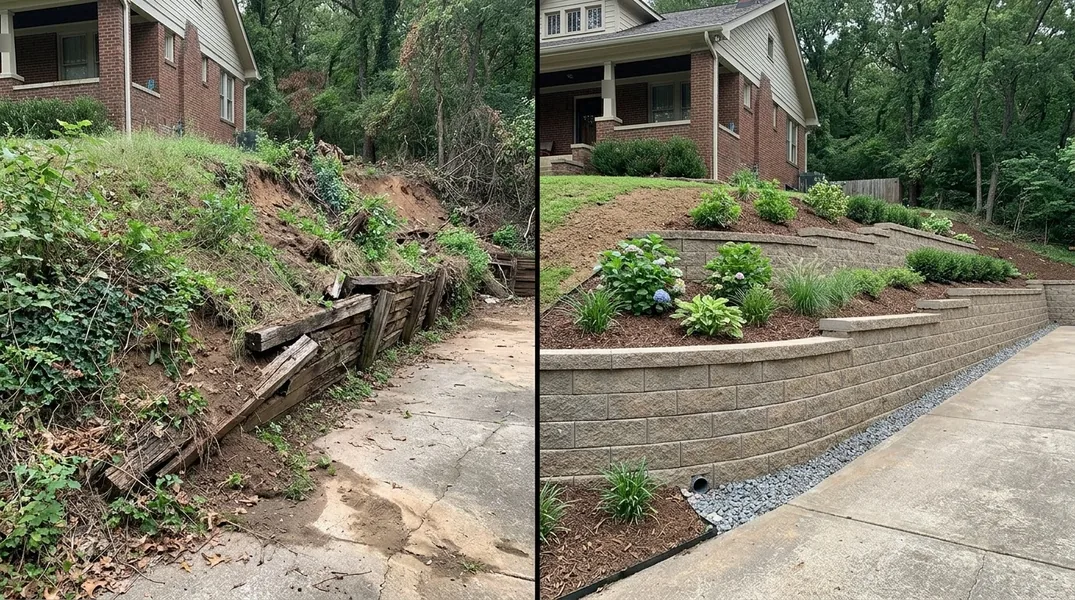
Block retaining walls, especially segmental retaining walls, are the most popular choice for residential projects in Germantown and across the Memphis area. These systems use interlocking concrete blocks that are dry-stacked and often pinned together, creating a strong wall that can flex slightly with soil movement instead of cracking. That flexibility is a real advantage in expansive clay. Segmental walls also drain well when built with gravel backfill and a perforated pipe, which is essential given our heavy summer storms.
Block walls come in dozens of styles, colors, and textures, so they can match a home's brick or stone and look good from the street. They work well for walls up to about four feet tall, and with geogrid reinforcement they can go higher. For many homeowners, a segmental retaining wall offers the best balance of cost, durability, and curb appeal. If you are comparing options for a Retaining Wall Installation project, block is usually the first material a contractor will recommend for typical residential slopes.
Boulder Retaining Walls: Natural Look for Creek Bottoms and Slopes
Boulder retaining walls use large, heavy stones stacked without mortar, and they shine in settings where a natural, rustic look fits the landscape. Along creek bottoms and wooded lots in Collierville, boulders can blend into the environment while holding back soft, wet ground. Because they are porous and irregular, boulder walls drain freely and handle settling better than rigid walls. They are also a good fit for low walls, terraced plantings, and erosion control near drainage channels.
However, boulder walls have limitations. They require careful placement of large stones, which means heavy equipment and skilled operators, and they are not ideal for tall walls or tight spaces because they lean back and take up room. In very wet creek-bottom soils, the base can shift if it is not set on stable gravel or compacted ground. Boulder walls also cost more than people expect because of the stone size and machine work involved. Used in the right spot, though, they are beautiful and long-lasting.
Retaining Wall Installation Near Me: Matching Material to Your Memphis Property
So which material is right for your yard? Start by looking at the slope, the soil, and the water. A short garden wall on a dry slope in Bartlett may be a perfect fit for a segmental block system. A tall wall holding up a driveway on expansive clay likely calls for concrete. A low, natural wall along a creek or wooded edge may be best built with boulders. The worst outcome is choosing a material based only on price or photos and then discovering it cannot handle the site.
This is where a local contractor earns their keep. An experienced installer will check drainage patterns, soil conditions, and wall height, then recommend a material and design that will hold up through Memphis wet seasons and dry summers. If an existing wall is leaning or cracking, Retaining Wall Repair may be possible, but sometimes a full Retaining Wall Replacement with a better-suited material is the smarter investment. Either way, get a professional opinion before you dig.
Retaining Wall Cost in Memphis: What to Budget for Each Material
Homeowners often ask what a retaining wall will cost, and the honest answer is that it depends on height, length, access, and material. As a general guide, segmental block walls are usually the most affordable per square foot, boulder walls fall in the middle once you account for stone and equipment, and poured concrete is typically the highest because of engineering, forming, and reinforcement. Wet creek-bottom sites or tight backyards with limited machine access can add to the cost regardless of material.
Do not forget drainage. A wall without proper gravel backfill, filter fabric, and a drain pipe is a wall waiting to fail, and fixing that later costs far more than doing it right the first time. The best way to get a real number is to request a free estimate from a local professional who can see your site. Memphis Retaining Wall serves homeowners across the area, and you can reach us at (901) 519-2101 to talk through your project and schedule a visit.
Looking for a professional retaining wall contractor in Memphis? Memphis Retaining Wall responds fast for all your retaining wall needs.
Get a Free QuoteOur services: Retaining Wall Installation · Retaining Wall Repair · Retaining Wall Replacement