The Soil Beneath Your Wall: Memphis Loess and Expansive Clay
If you live in Memphis, you probably already know that our soil behaves differently from what you see on home improvement shows. The bluffs along the Mississippi River are built on loess, a wind-deposited silt that is famously stable when dry but loses strength quickly when saturated. Underneath and alongside that loess, you often find expansive clay that swells after heavy rain and shrinks during dry spells. That combination is hard on any structure, and it is especially hard on retaining walls.
Loess holds together well in a vertical cut, which is why so many older walls in the area were built with minimal drainage. The problem is that loess can collapse or slump when water infiltrates and lubricates the particles. Expansive clay does the opposite: it pushes outward with tremendous force as it absorbs moisture. A wall that was perfectly plumb when installed can start to lean or bow within a few seasons if it was not designed for these specific conditions. Understanding this local geology is the first step in diagnosing why a wall is moving and what it will take to fix it.
Why Retaining Walls Fail: Drainage, Design, and Time
Most failing walls in the Memphis area fail for one of three reasons: water, inadequate design, or age. Water is the biggest culprit. When runoff from a slope or a downspout cannot escape through proper drainage, it builds up behind the wall and creates hydrostatic pressure. That pressure can double the load the wall was designed to carry. In loess, water also softens the soil, reducing its bearing capacity and allowing the wall footing to settle unevenly. Expansive clay makes it worse by pushing against the back of the wall as it swells.
Design problems often go unnoticed until the wall starts to move. A wall that is too tall for its base, lacks proper geogrid reinforcement, or was built with the wrong block for the application will struggle. Older walls may have been built before modern drainage standards were common, and time only makes the problems worse. Freeze-thaw cycles, root growth, and gradual soil movement all add stress. If you are seeing a leaning retaining wall or a bowing retaining wall fix may be possible, but the underlying cause has to be addressed first. A reputable contractor will evaluate drainage, soil conditions, and structural capacity before recommending a repair strategy.
Warning Signs of a Failing Retaining Wall
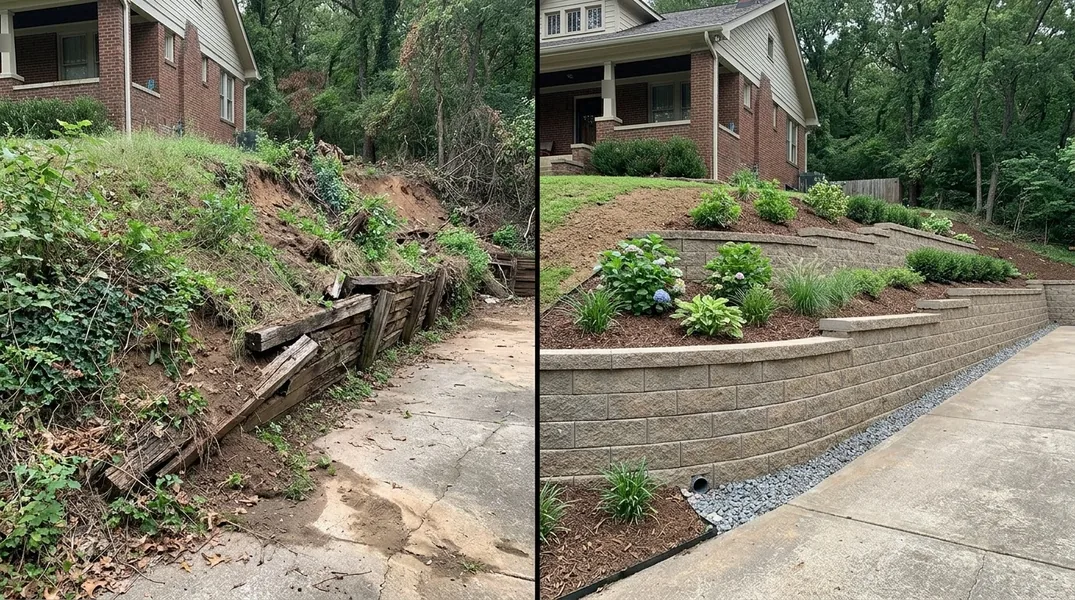
Homeowners often miss the early warning signs because retaining walls fail slowly. The first clue is usually visual: a wall that was once straight now has a noticeable lean, or the top course is no longer level. You might see horizontal cracks running along the face of the wall, or vertical cracks that widen over time. Bulging or bowing in the middle of the wall is a serious sign that the pressure behind it has exceeded its capacity. In concrete walls, look for stair-step cracking or separation at the joints.
Other warning signs are less obvious but equally important. Soil settling behind the wall creates depressions that collect water, which accelerates the problem. Weeping or wet spots at the base of the wall after rain suggest drainage is clogged or missing. Gates and fences attached to the wall may start to stick or swing unevenly. If you notice any of these issues, it is worth getting a professional assessment before the wall moves further. Small repairs caught early are almost always less expensive than waiting for a wall to collapse, and they are safer for your family and your property.
Retaining Wall Repair Near Me: When to Call a Pro
Some homeowners in Germantown and Collierville try to patch a failing wall themselves, but retaining walls are structural systems. A cosmetic fix that ignores the cause can fail again quickly, and in some cases it can make the wall less safe. If a wall is leaning more than a few inches, has significant bulging, or shows signs of footing settlement, it is time to call a professional. A proper evaluation includes checking the wall height, soil type, drainage, and any signs of movement in the footing.
For walls that are too far gone for repair, Retaining Wall Replacement may be the more cost-effective long-term solution. Modern Concrete Retaining Walls and reinforced block systems are designed to handle the expansive clay and loess conditions we have here. If you are searching for retaining wall repair near me, look for a contractor who understands local soil conditions and can explain the cause of the failure, not just the fix. You can contact Memphis Retaining Wall at (901) 519-2101 to schedule an assessment and get a clear picture of your options.
Preventing Future Failures: What a Proper Installation Looks Like
The best way to avoid a failing retaining wall is to get the installation right the first time. That starts with proper site evaluation and soil testing. A contractor should determine whether the wall will sit on loess, clay, or a mix, and design the footing and reinforcement accordingly. Drainage is non-negotiable: gravel backfill, perforated pipe, and filter fabric should be part of every wall, along with surface grading that directs water away from the wall. In taller walls, geogrid reinforcement extends into the soil to resist overturning and sliding.
If you are planning a new wall in Bartlett or anywhere in the Memphis area, ask prospective contractors how they handle drainage and soil conditions specific to the region. A proper Retaining Wall Installation should include a compacted base, correct block alignment, and a drainage system that will keep working for years. It is also wise to ask about pricing upfront so you can compare bids fairly. A wall that is built for the soil and water conditions here will last far longer than one that is simply copied from a generic plan.
What to Do If Your Wall Is Already Showing Problems
If you have read this far and recognized your own wall in the warning signs, do not wait for the next heavy rain to make things worse. Start by taking photos and noting any changes in lean, cracking, or bulging. Avoid adding heavy loads near the top of the wall, and make sure downspouts and surface water are directed away from the wall. These steps will not fix the problem, but they can slow the damage while you arrange a professional inspection.
Memphis Retaining Wall serves homeowners throughout the Memphis area and can help you determine whether repair or replacement makes more sense. A free estimate will give you a clear understanding of the cause, the recommended fix, and the expected cost. Call (901) 519-2101 or visit the website to get started. Addressing a failing wall early protects your landscape, your home, and your peace of mind.
Looking for a professional retaining wall contractor in Memphis? Memphis Retaining Wall responds fast for all your retaining wall needs.
Get a Free QuoteOur services: Retaining Wall Installation · Retaining Wall Repair · Retaining Wall Replacement